
UK sovereign fund co-leads backing for Cambridge start-up rebuilding quantum chemistry for drug discovery
Potential Sciences, a year-old company led by Hatem Helal, says its software runs chemistry’s most trusted calculation at a hundredth of the usual cost and will use national…

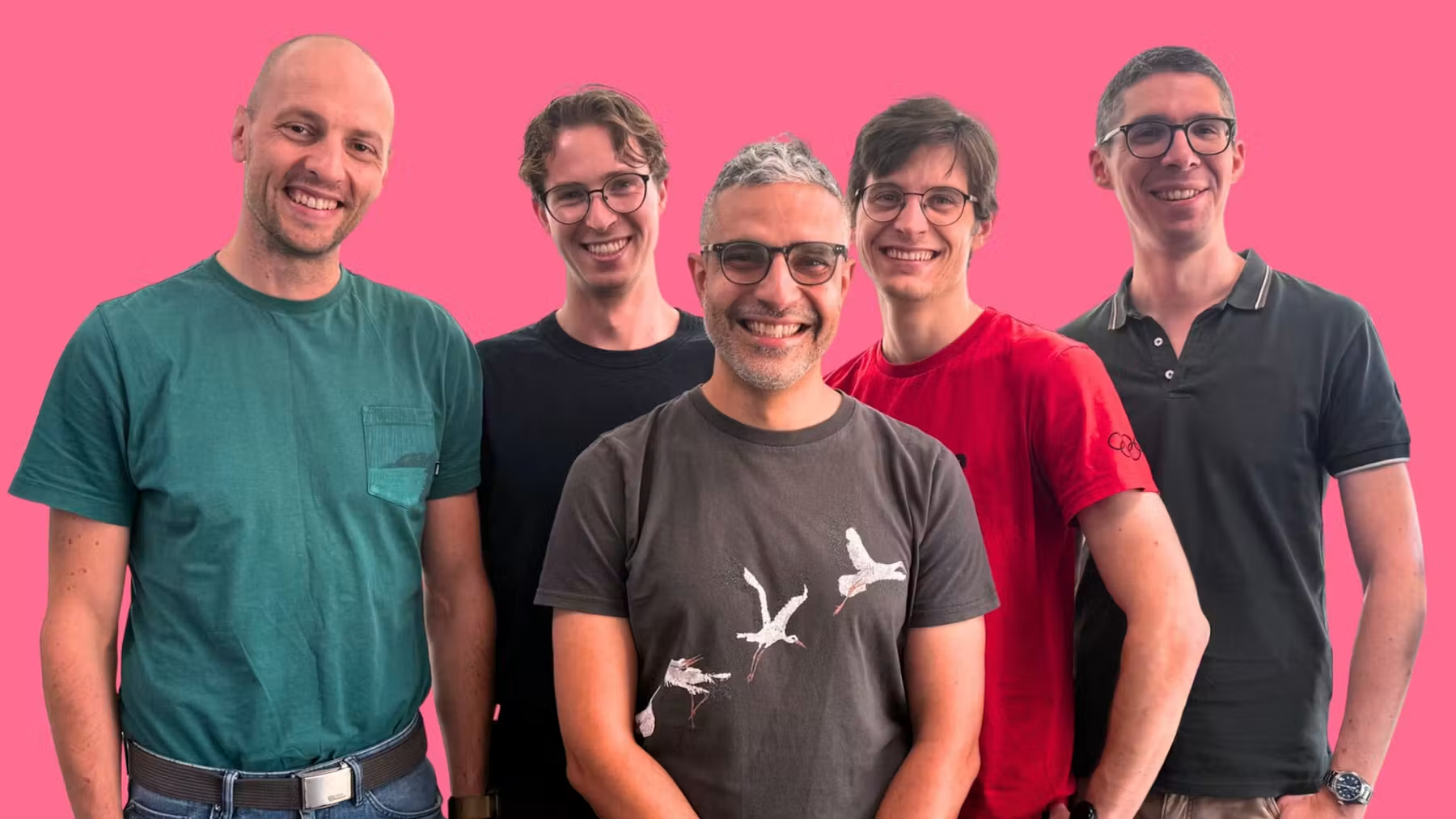
Potential Sciences, a year-old company led by Hatem Helal, says its software runs chemistry’s most trusted calculation at a hundredth of the usual cost and will use national supercomputers to produce AI training data for millions of molecules.
Potential Sciences, a Cambridge start-up that uses the equations of quantum mechanics to generate training data for artificial intelligence in chemistry, emerged from stealth on Thursday with an eight-figure seed round co-led by the British government’s Sovereign AI fund and Twin Path Ventures.
The company has not disclosed the exact sum, which combines equity with computing time. Blue Wire Capital, Lightfield Equity, Nauta Capital, Odyssey, Portfolio Ventures and Rule30 also took part, and the company names Patrick Collison, the Stripe co-founder, and Chris Gibson, co-founder and former chief executive of Recursion, among its angel investors. Sovereign AI is also acting as a compute partner, giving the company access to the AI Research Resource, the UK’s national network of advanced supercomputers, including Isambard-AI in Bristol.
The investment rests on a specific diagnosis of where AI drug discovery is stuck. The company argues that chemistry models are short of data because they all learn from the same finite record of past experiments, or from simulations too crude to trust. “AI for drug discovery has learned almost everything the existing experimental record can teach it,” said Dr Helal, the founder and chief executive. “The next leap needs new data, and the laws of physics can supply it.”
The physics in question is CCSD(T), a coupled-cluster method that chemists widely treat as the reference standard for calculating molecular energies. Its drawback is cost. The computational burden of CCSD(T) rises with the seventh power of the number of basis functions used to describe a molecule, so modest increases in size become prohibitively expensive. According to Potential Sciences, the field’s main software was also written for 1980s supercomputers with a handful of processors and cannot exploit the thousands of cores in a modern graphics chip.
The company says it has rewritten the method for GPUs from the equations up, cutting costs a hundredfold and making it possible to compute accurate data for millions of molecules where researchers could previously afford thousands. That figure is the company’s own and has not been independently tested; a post from the company said its first technical deep-dive would follow in the coming weeks. The method also has known limits. CCSD(T) is most dependable for stable, well-behaved molecules near equilibrium, and less so for bond-breaking, diradicals and transition-metal chemistry.
The computed data is meant to train what the company calls atomistic foundation models, which learn how atoms interact and could let drug developers estimate whether a molecule is worth making, how tightly it will bind to its target and whether it will strike proteins it should avoid, before any laboratory assay. Initial work will focus on small-molecule drugs, with AI-first laboratories on lead optimisation, reaction prediction and covalent drug design. Catalysts, enzymes and materials are longer-term targets. “When your code is 100 times more efficient, a seed round buys what used to take a dedicated data centre,” Dr Helal said.
His team of physicists, chemists and mathematicians trained at Caltech, Cambridge and CERN and previously built AI systems for science at Graphcore, Recursion and Dayhoff Labs. Its members created QM1B, a quantum chemistry dataset of a billion calculations, and won two tracks of the OGB Large-Scale Challenge at NeurIPS 2022. The company has researchers in Bristol and Tübingen and is advised by Andrew Fitzgibbon and James Hawkins.
For the state fund, the deal adds to a portfolio weighted towards science and drug discovery. Sovereign AI was launched in April with up to £500 million and says its typical equity cheques run from £1 million to £10 million. Its earlier backing includes Callosum and Ineffable Intelligence, and before the fund formally opened, the unit had put £8 million into the OpenBind consortium to accelerate drug discovery. In September, Sifted reported that the fund was in talks to invest and that Joséphine Kant, its head of ventures, was expected to join the company’s board. Ms Kant, now described as an investment partner at the fund, called Dr Helal “a formidable founder”.
Kanishka Narayan, the AI minister, said that solving chemistry’s “data bottleneck” could let researchers pursue treatments for diseases currently judged too rare or too expensive to target. Nick Slater, a partner at Twin Path, said the next advance in AI drug discovery would come “from better data, not just better architectures”.
The money will be spent on expanding the research team, scaling the dataset and training the company’s first models. Potential Sciences has not named any pharmaceutical partners, and the decisive evidence, whether models trained on computed data improve real lead-optimisation programmes, has yet to be published.
Written by the newsroom, not a summariser. Free, and you can leave whenever.




0 comments
Anyone can read the thread · subscribers can post