
Microsoft pulls out of Nscale’s Essex AI data centre after grid delay pushes power Into the 2030s
The loss of its anchor tenant at Loughton comes a month after Nscale filed for a New York listing built largely on contracts with Microsoft and Anthropic. Microsoft…

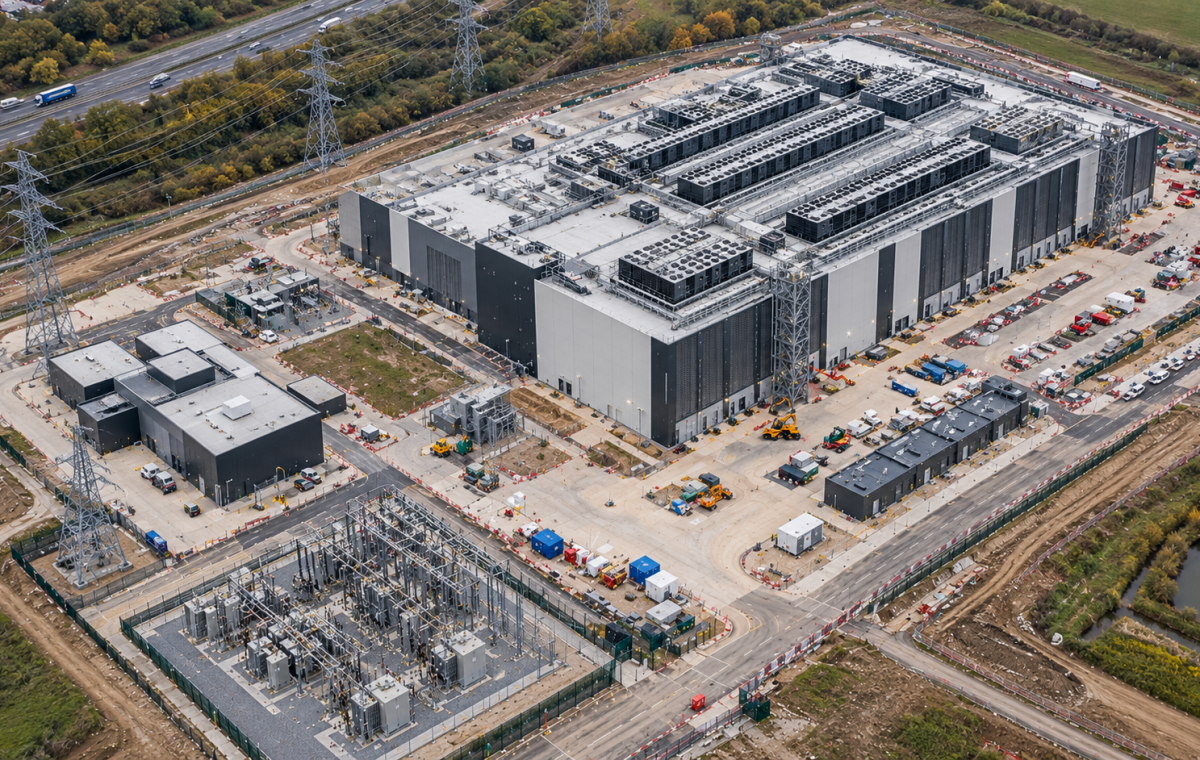
The loss of its anchor tenant at Loughton comes a month after Nscale filed for a New York listing built largely on contracts with Microsoft and Anthropic.
Microsoft has abandoned its agreement to anchor Nscale’s planned artificial intelligence data centre in Loughton, Essex, after electricity network officials told the British company the site might not be connected until the 2030s, years after it was due to open.
The withdrawal was first reported by The Telegraph and confirmed by Microsoft on Monday. It removes the principal customer from a project the government had presented as a centrepiece of Britain’s domestic computing ambitions. “This decision relates to a single site,” a Microsoft spokesperson said, adding that the company remained committed to its partnership with Nscale, including building digital infrastructure and supporting AI growth globally.
The Loughton project was one of the technology deals unveiled during Donald Trump’s state visit in September 2025, intended to showcase Britain’s ambition to lead in AI. The companies said the site would begin operating early next year, with 23,040 Nvidia GB300 processors providing 50 megawatts of computing capacity for Microsoft’s Azure services in Britain. It was designed to scale to 90 megawatts. Keir Starmer, then prime minister, cited it as the largest UK sovereign AI data centre, and Nscale had unveiled £2bn plans for the complex.
The timetable had already slipped once. According to The Times, Nscale had originally predicted the site would be available in the fourth quarter of 2026 before moving the date to the first three months of 2027. As recently as March, The Guardian reported that the land was still being used as a scaffolding yard.
The obstacle is power. The Guardian reported on September 24, citing UK Power Networks, the operator responsible for connecting the site to the local grid, that it might not receive enough electricity to operate until the early to mid-2030s. Neither company has published the connection offer, and the precise date has not been independently established.
Nscale places the problem outside its control, describing it as an “unfortunate London-wide grid issue” that does not affect its other contracts. The company said it remained committed to Loughton and to Britain, and was exploring alternative power sources for the site as well as other UK expansion sites. The Telegraph reported last month that Nscale had held talks with Bloom Energy, a Californian supplier of fuel cells that can generate electricity from natural gas, and that the company holds planning permission and expects eventually to obtain a 90-megawatt supply. No revised opening date has been given, and no replacement tenant has been named.
The setback lands at a delicate moment. Nscale’s filing with the US Securities and Exchange Commission, dated September 18, precedes a proposed New York Stock Exchange listing under the ticker NSCL. The company reported $103.4bn in active and contracted value but a net loss of $1.02bn for the first half of 2026. Only $2.6bn of that contract value was active, leaving most of the capacity dependent on future construction, equipment delivery and financing.
The customer base is narrow. Microsoft and Anthropic account for about 85 percent of total contract value. The filing says the Microsoft agreements provide for payments of up to $43.8bn and the Anthropic agreements up to about $44.6bn, both subject to delivery and service availability requirements.
How much Loughton weighs within that figure is unclear. A person familiar with the matter told AFP that the Essex deal was only a small portion of Microsoft’s agreements with Nscale. The two companies’ larger commitments lie elsewhere: in October 2025 Nscale agreed to deploy roughly 200,000 Nvidia GB300 chips for Microsoft, including about 104,000 at a campus in Texas and 12,600 in Portugal, in a deal worth up to $14bn. Nscale insisted its relationship with Microsoft remains “strong and long-term.”
The company was founded in 2024 as an offshoot of Arkon Energy, a Melbourne-based crypto miner. Its rapid growth has rested on promises of capacity yet to be built, which makes delays costly. Delays at its Glomfjord site in Norway have already triggered penalties owed to customers, Microsoft among them.
The episode has also become political. Peter Fortune, the shadow business minister, asked what it told companies hoping to expand in Britain if a project of this size could not get plugged in. aol
Grid congestion is a long-standing complaint. UK Power Networks has run fast-track schemes for developers who had been told they might wait a decade or more for a connection. The National Energy System Operator has been overhauling the connections queue, prioritising projects deemed critical to the government’s 2030 clean power target. Data centres compete for the same capacity as housing and industrial electrification.
For now, Loughton stays in Nscale’s plans, with planning consent in hand but no date for the power it needs and no customer to buy its output.
Written by the newsroom, not a summariser. Free, and you can leave whenever.






0 comments
Anyone can read the thread · subscribers can post