
UK start-up Zenithon releases Nova, an AI model it says can replace weeks of fusion simulation with minutes
The London company, which raised $10m three weeks ago, says its first model found a laser-fusion design needing a fifth less laser energy, though none of its results…

The London company, which raised $10m three weeks ago, says its first model found a laser-fusion design needing a fifth less laser energy, though none of its results has yet been independently tested.
Zenithon, a London artificial intelligence start-up, has released Nova, which it calls the first “world model for extreme physics”. The company says the model was pretrained on plasma physics, fluid dynamics and other simulation data, and forecasts how a physical system will evolve from a starting state and a series of actions, producing full predictions in seconds rather than the hours conventional simulators need, and adapting to new design regimes from a few examples.
In its launch announcement, Zenithon said Nova runs about 100,000 times faster than conventional simulation on a single graphics processor. A fusion design search that would take weeks by simulation took roughly two minutes. The company also says Nova identified a reactor design predicted to need about 20% less laser energy for the same fusion yield, which it estimates could reduce the capital cost of each plant by $50m to $100m.
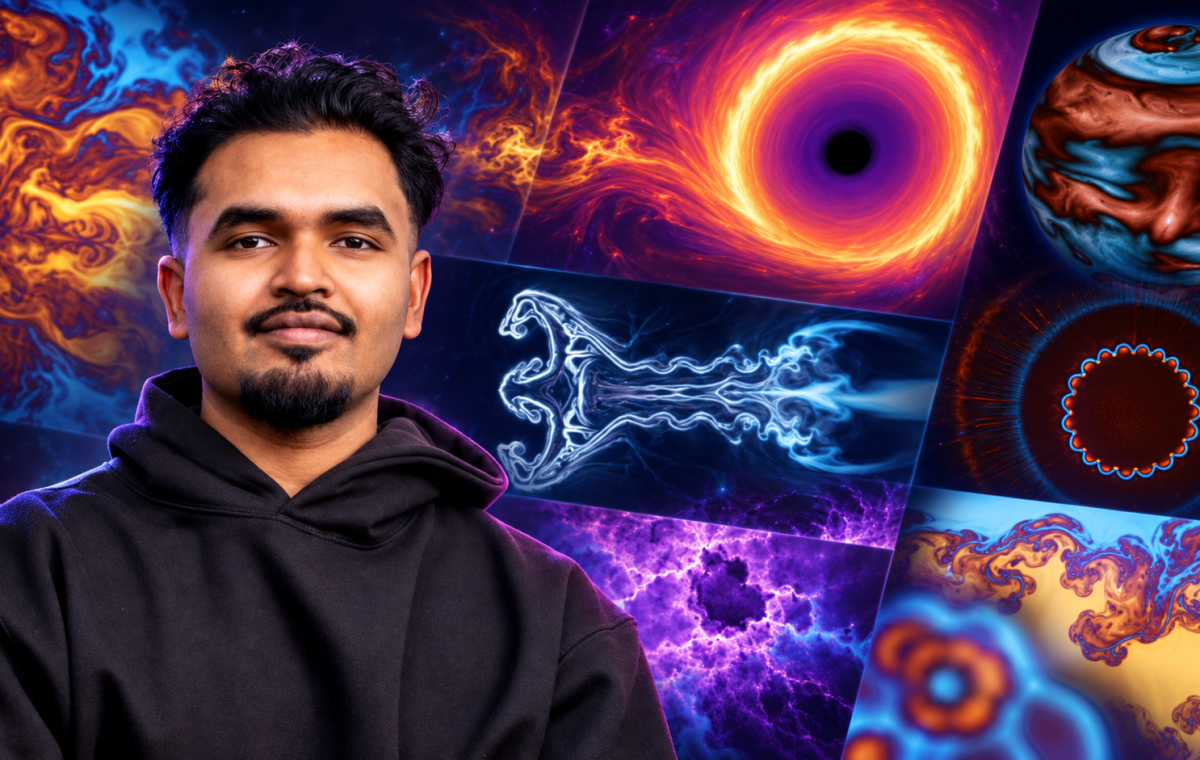
If those figures hold, they address a real constraint. A single high-performance computing run of the kind Nova is meant to replace takes from 10 hours to several days, and that limits how many reactor geometries, magnetic configurations and operating scenarios engineers can realistically test. Laser energy is a particularly expensive variable for inertial fusion, in which lasers compress a fuel capsule: plant costs rise with the laser energy required, because the volume of laser amplifiers grows with it. When the US National Ignition Facility achieved ignition in 2022, it released 3.15 megajoules of energy using 2.05 megajoules of laser energy. Material published alongside the launch shows Nova’s output for fuel density inside a laser-driven fusion capsule, next to the laser pulse profile.
The results come from the company and have not been independently reproduced. The laser saving is a prediction about a design, not a measurement from an experiment. The Fusion Report, a trade newsletter that carried the announcement, noted that Zenithon’s earlier published work described validation against unseen simulation data, while its broader speed claims and its use of live experimental data at production scale have yet to be demonstrated commercially. The 100,000-fold figure is also more modest than the one used while the company was raising money: in September, Higginbottom described models roughly a million times faster than conventional runs.
Zenithon was founded in July 2025 by chief executive Alex Higginbottom and chief technology officer Abetharan Antony. Higginbottom spent three years working with about 20 fusion companies on commercialisation before beginning a doctorate in AI for plasma physics, which he abandoned after raising pre-seed funding. He has said he left out of frustration at the rate of progress in fusion energy. The founders developed their first product during academic work on machine-learning surrogates for gyrokinetic transport, a calculation describing how heat and particles move through a fusion plasma.
Last month the company raised $10m in a round led by Backed, with Seraphim, Lunar Ventures, MMC Ventures, SOSV and angel investors also participating. Its advisers include Dan Brunner, a co-founder of Commonwealth Fusion Systems, and Zongyi Li, an assistant professor at NYU. It has 11 full-time staff and plans to reach 17 within six months. Higginbottom said most of the money would go on compute and data to train models with several billion parameters, and that leading fusion companies, which he did not name, were already using its work daily.
The company is small by the standards of its field. Its main rival, PhysicsX, also based in London, has raised more than $400m, including $300m at a $2.4bn valuation. Other European world-model labs include AMI, founded by former Meta scientist Yann LeCun, which raised $1bn. Fusion itself is well funded: private investment reached a record $4.48bn in the year to July 2026, according to the Fusion Industry Association.
Zenithon presents fusion as a starting point. Plasma physics also governs wafer etching in chipmaking, where Lam Research’s chief technology officer has cited about 100 trillion possible ways to make a wafer, and the company plans to apply its models to aerospace as well. Transfer is not guaranteed; as one analysis of the company put it, speeding up one plasma calculation does not automatically carry over to rocket design or chip manufacturing. Simulation speed is also only part of the timetable: building fusion hardware that could use such advances still takes considerable time, which modelling does little to shorten.
Higginbottom has said the model is the first to combine tokamaks, laser fusion and other confinement approaches in one system, and that new versions will follow every one to two months. Until a fusion developer reports results from hardware built with its help, the 20% laser saving remains a model’s prediction for a design that has not been built.
Written by the newsroom, not a summariser. Free, and you can leave whenever.






0 comments
Anyone can read the thread · subscribers can post