
OQC secures record £260m funding to accelerate global quantum expansion
Oxford Quantum Circuits (OQC) has raised £260 million ($350m) in an oversubscribed Series C round, marking Europe’s largest private investment in a quantum computing company. The funding positions…

Oxford Quantum Circuits (OQC) has raised £260 million ($350m) in an oversubscribed Series C round, marking Europe’s largest private investment in a quantum computing company. The funding positions OQC among the world’s best-capitalised private quantum firms.
The round was led by Bullhound Capital and included backing from the British Business Bank and a consortium of international investors. Existing stakeholders such as Oxford Science Enterprises and Chevron Technology Ventures also participated. J.P. Morgan acted as exclusive placement agent.
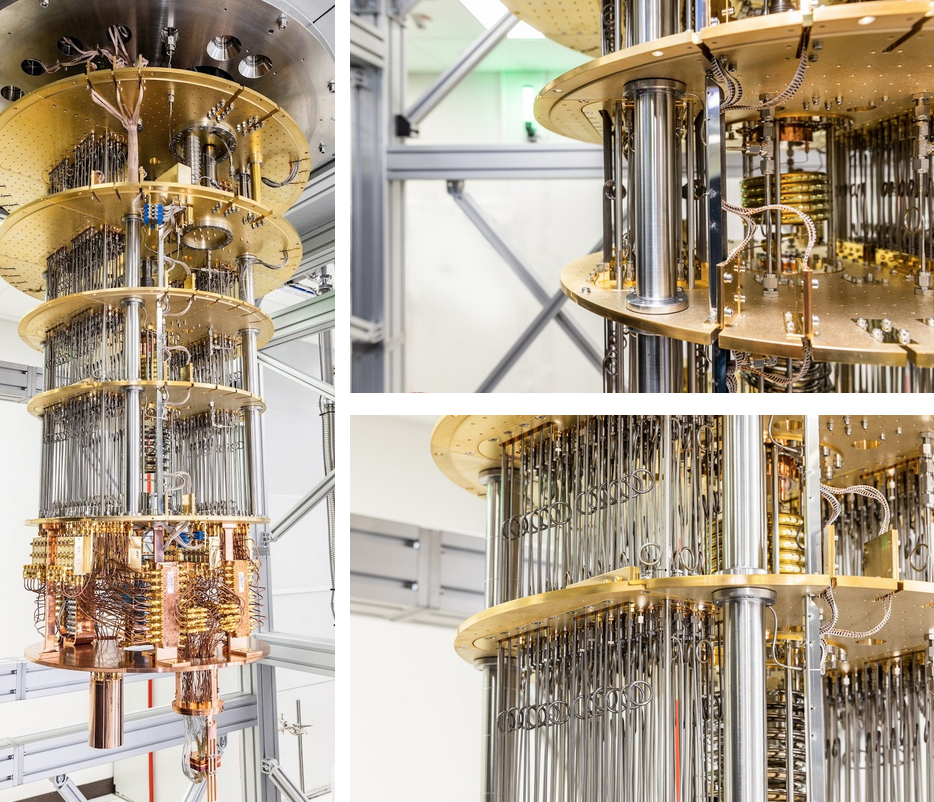
Founded in the UK, OQC develops superconducting quantum computers designed for deployment in data centres serving enterprise and government clients. Its systems are already operational across Europe, North America and Asia, including the UK, US, Japan and Spain.
Chief Executive Gerald Mullally described the raise as “a coming-of-age moment for British quantum computing,” adding it reflects “a clear shift in the market, from long-term promise to near-term delivery.” Founder and Chief Scientific Officer Peter Leek said the investment will support improvements in system performance and integration into “trusted infrastructure customers depend on.”
UK Chancellor Rachel Reeves called the funding “a major vote of confidence in the UK’s quantum sector,” highlighting the government’s commitment of up to £2bn to support commercial scaling. Science Minister Patrick Vallance added the deal places British firms “at the heart of the global quantum race.”
OQC said the capital will fund international expansion and accelerate development of fault-tolerant quantum systems, as demand grows across sectors including finance, defence and security.
https://www.youtube.com/watch?v=QAYx9-tNDDc
Oxford Quantum Circuits (OQC) builds superconducting quantum computers designed for deployment in real-world data centre environments rather than isolated laboratory systems. The company’s technology roadmap is structured around successive generations of machines aimed at increasing qubit scale, stability, and error correction capability.
Its earlier generation systems, including “Lucy” (4 qubits) and “Sophia” (8 qubits), have evolved into more advanced platforms such as OQC TOSHIKO®, a 32-qubit quantum computer deployed in colocation data centres across the UK, Spain, and Japan. TOSHIKO® represents the company’s third-generation system and is intended for enterprise and research access via cloud and direct deployment models.
OQC’s next-generation system, OQC GENESIS, is positioned as its fourth-generation device and part of what the company calls the “logical era.” It is designed for deployment in New York City and features 16 dual-rail “DIMON®” qubits. These qubits are engineered to enable error detection at the individual qubit level and significantly extend qubit lifetimes.

At the core of OQC’s architecture is its DIMON® dual-rail encoded qubit design, which aims to reduce key sources of error in superconducting systems. By encoding two physical qubits into one logical unit, the system can detect errors more efficiently while reducing hardware overhead. This approach is intended to improve scalability and move closer to fault-tolerant quantum computing, where systems can perform complex computations reliably at large scale.
OQC said the £260 million Series C funding will be used to expand its operational presence in key international markets and accelerate the development and deployment of its quantum computing systems, including next-generation fault-tolerant technologies. The company will continue scaling its data-centre-based quantum platform across Europe, North America and Asia as enterprise and government demand increases.
Written by the newsroom, not a summariser. Free, and you can leave whenever.







0 comments
Anyone can read the thread · subscribers can post