Elon Musk is backing a new and unusual idea in the fast-growing world of artificial intelligence: moving data centres off the Earth and into space. The plan has drawn attention after reports that SpaceX, his rocket company, may merge with his AI start-up, xAI. Together, the two businesses could push forward a vision of running powerful AI computers on satellites in orbit.
The timing is not accidental. AI systems are expanding quickly, and the data centres that run them consume enormous amounts of electricity and water. In many countries, power grids are struggling to keep up, while new data-centre projects face rising costs and public resistance. Space, Mr Musk argues, could offer a way around those limits.
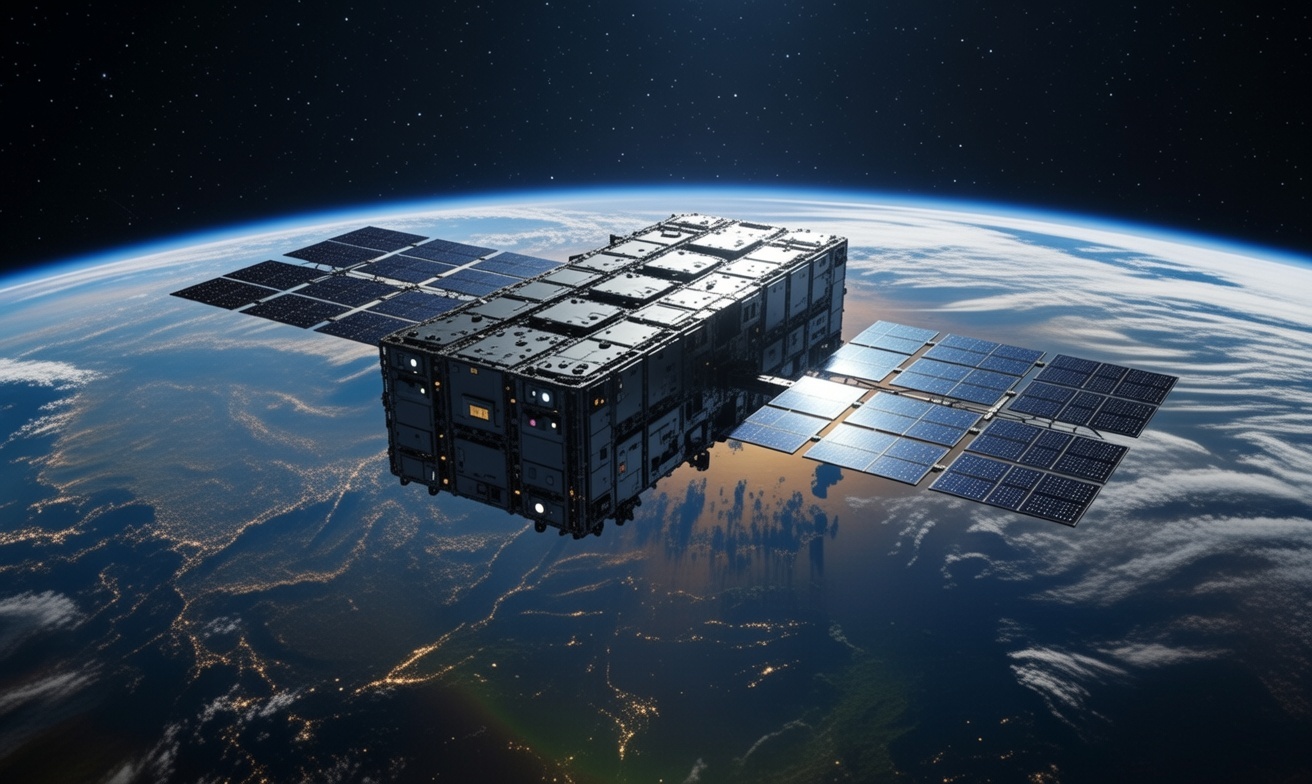
Instead of large buildings packed with servers, the idea is to use networks of satellites fitted with advanced computer chips. These satellites would work together, sharing data through space-based links. Power would come mainly from solar panels, which receive sunlight almost constantly in orbit.
Supporters say this approach could solve two big problems at once: energy and cooling. On Earth, cooling servers is expensive and energy-intensive. In space, heat can be released directly into the vacuum, which sounds simple, at least on paper.
Experts caution that reality is more complicated. Space electronics must survive radiation, extreme temperatures and the risk of collisions with debris. Repairs are difficult, and replacing outdated hardware means launching new satellites. Analysts expect small test projects later in the decade, but large-scale systems remain many years away.
Why Musk is interested
Mr Musk has clear advantages in this area. SpaceX already launches rockets frequently and runs the Starlink satellite network, which includes thousands of satellites. If AI computing moves into orbit, SpaceX would be well placed to build and manage it.
There is also a competitive reason. xAI is racing against firms like Google, Meta and OpenAI, which rely on vast Earth-based data centres. Controlling a new kind of computing infrastructure could give Musk more independence and flexibility.
Mr Musk has said publicly that space will soon be the cheapest place to run AI, thanks to falling launch costs and constant solar power. Many analysts believe this view is optimistic, but they agree that pressure on Earth-based infrastructure is growing fast.
Other companies are exploring similar concepts. Jeff Bezos’ rocket firm, Blue Origin, has long discussed moving energy-hungry industries into space. Nvidia-backed projects have already tested AI chips on satellites, while Google is researching orbital computing networks using solar-powered systems.
China has also announced plans to develop space-based AI infrastructure over the next few years, seeing it as part of a broader push for technological leadership.
For now, space-based AI data centres remain experimental. The costs are high, the technology is unproven and regulation is uncertain. There are also concerns about adding even more satellites to crowded orbits.
Still, the idea shows how serious the race for AI power has become. As demand for computing grows and Earth’s limits become clearer, companies are starting to look beyond the planet itself.