Accenture has agreed to buy Faculty, a UK artificial intelligence company, in a deal that could be worth more than 1 billion dollars.
The global professional services firm, which is listed on the New York Stock Exchange, announced the acquisition on 6 January 2026. The financial terms were not shared. However, early investors say Faculty was valued at at least 1 billion dollars. That makes it one of the biggest AI exits the UK has seen in recent years.
Faculty employs more than 400 AI specialists. Its team and its main technology platform will be folded into Accenture’s global business once the deal closes.
At the center of the deal is Faculty Frontier™, a decision intelligence product used by large organisations. It links data, AI models and everyday business processes. The goal is to help leaders make faster and better decisions. Accenture already knows the product well. It has worked with Faculty since late 2023 as a preferred partner for rolling Frontier out to clients.
Accenture says the combination will help clients rethink core business processes using safe and secure AI. The focus, it says, is on real results, not experiments.
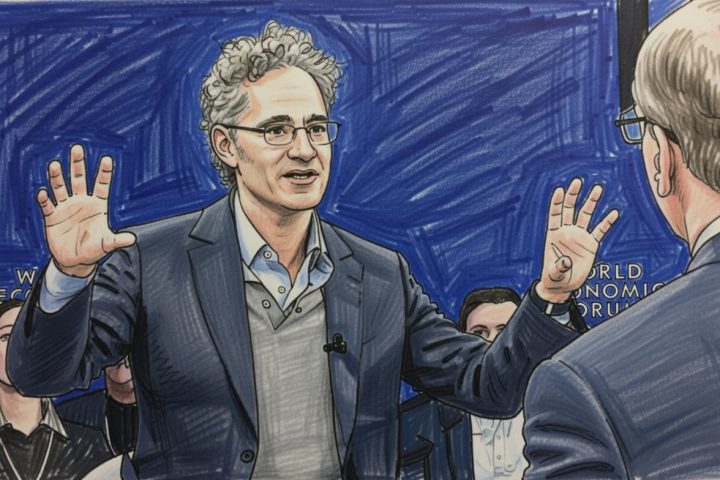
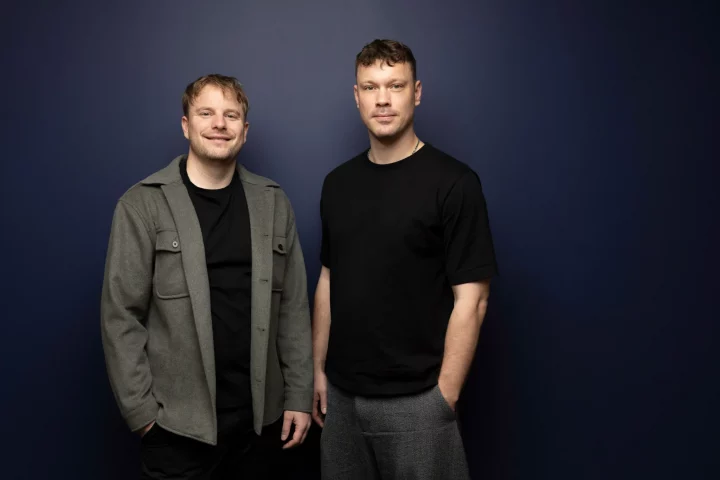
Faculty’s chief executive, Marc Warner, will take on a much bigger role. He is set to become Accenture’s Chief Technology Officer and will join its Global Management Committee when the deal completes.
That is a huge job. Accenture has around 780,000 employees worldwide. Warner will now help shape technology strategy at a scale very few people ever reach. He previously worked as a quantum physics researcher at Harvard and sits on the UK government’s AI Council.
Julie Sweet, Accenture’s chair and CEO, said the appointment is key to the company’s AI plans. She said the deal would speed up Accenture’s push to bring trusted and advanced AI into the heart of its clients’ operations.
Faculty has always taken a slightly different path from many AI startups. It was not built as a research lab or a pure software company. From the start, its focus was on applying AI in high stakes, real world environments.
Its work spans AI strategy, system design, safety and large scale deployment. Faculty works with governments and businesses in the UK and abroad. The aim is to help organisations use AI at scale, without letting risks spiral out of control.
One of its most well known projects came during the COVID-19 pandemic. Faculty built the NHS Early Warning System. The tool was used daily by NHS Gold Command. It predicted patient demand across the country and helped direct critical care resources to where they were needed most.
This was not a place for guesswork. Mistakes could cost lives. The system had to be accurate, clear and trusted. For many, it showed what applied AI could really look like under pressure.
That same mindset shapes Faculty’s work on AI safety. Safeguards are built in at every stage. This includes development, testing and live monitoring. The company works with major AI labs such as OpenAI and Anthropic. It also collaborates with groups like the UK AI Security Institute to assess the safety of powerful, general purpose models.
For Accenture, which serves governments and highly regulated industries around the world, that experience matters a lot.
Faculty now joins a long list of British AI firms bought by US companies. Others include DeepMind, Darktrace and Oxford Ionics.
Some see this as a success story. Early investor Matt Clifford called it a huge win for UK AI. Venture capitalists also argue that big exits bring money and confidence back into the ecosystem.
Others are less sure. They worry it shows how hard it still is to grow UK startups into global tech giants that stay independent.
Accenture, for its part, is cautious in its messaging. The announcement comes with plenty of forward looking statements. The company points to regulatory approvals, integration challenges, economic uncertainty and the legal and reputational risks that come with developing AI at scale.