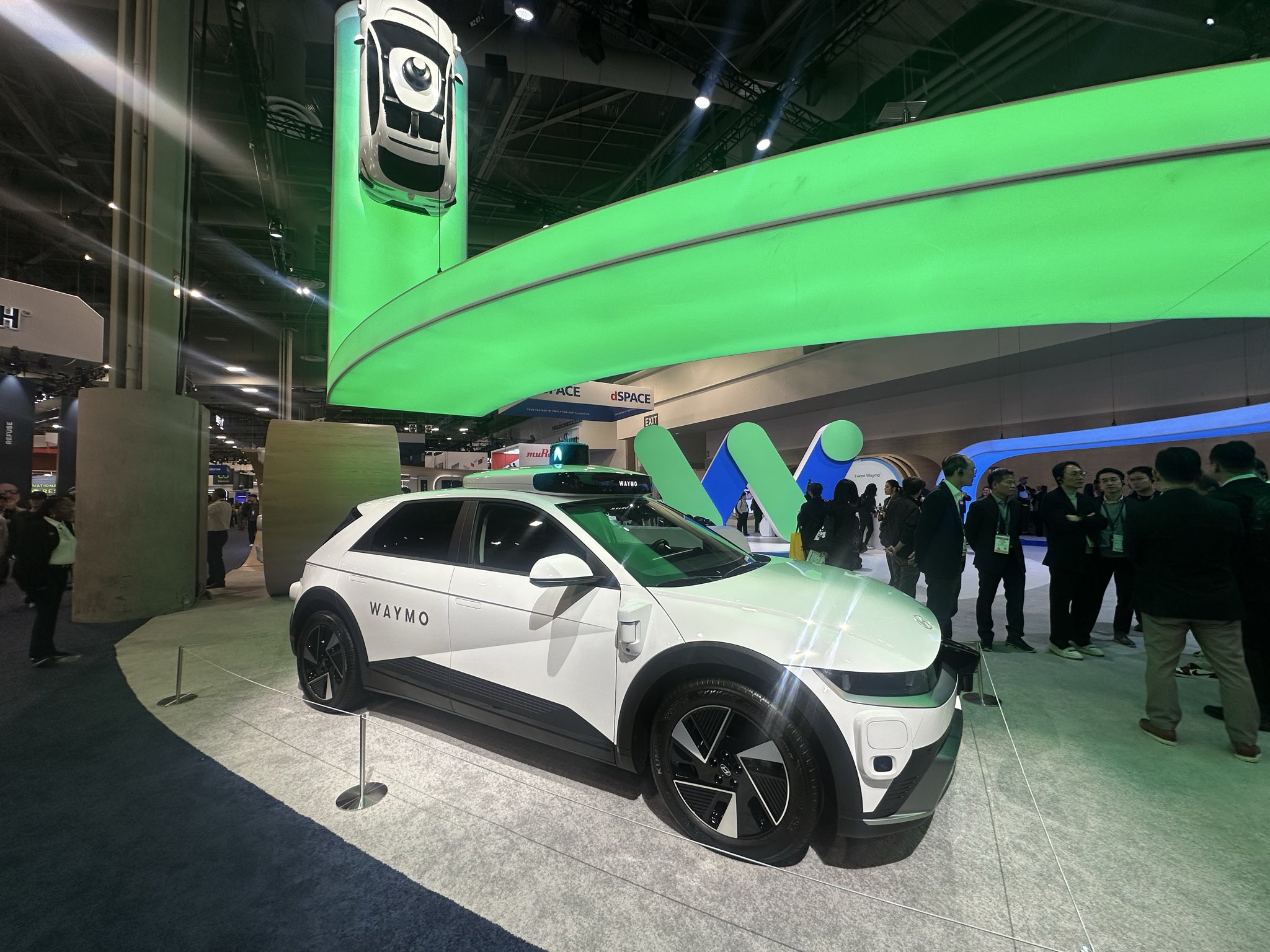
Waymo, the self-driving car company owned by Alphabet, has raised $16 billion in new funding. The deal values the company at $126 billion, putting it among the most valuable private tech companies in the world.
The announcement came on February 2. The funding round was led by Dragoneer Investment Group, DST Global, and Sequoia Capital, with support from big-name investors like Andreessen Horowitz, Mubadala Capital, Tiger Global, Silver Lake, and T. Rowe Price. Alphabet remains Waymo’s main owner.
Waymo’s two co-CEOs, Tekedra Mawakana and Dmitri Dolgov, say this investment shows that self-driving cars are no longer just an experiment.
“We are no longer proving a concept; we are scaling a commercial reality,” they said in a company blog post.
In simpler terms, Waymo believes robotaxis are finally becoming real businesses, not just tech demos.
Waymo started years ago as a Google research project. Today, it runs a paid robotaxi service in six major U.S. metro areas, and its white Jaguar vehicles are now common sights in places like San Francisco and Los Angeles.
As of early 2026, Waymo operates in 10 U.S. cities. The company plans to expand to about 20 metropolitan areas within a year, including London and Tokyo. Miami has already been added recently.
Right now, Waymo gives more than 400,000 rides every week.
That is a big deal. It means real people are using these cars to get to work, run errands, or head home after dinner. This is not just a trial anymore.
Last year alone, Waymo more than tripled its rides to 15 million, and it has now passed 20 million total rides since launching.
Waymo also talks a lot about safety, and for good reason. Trust is still one of the biggest barriers to driverless cars.
The company says its vehicles have driven 127 million miles fully autonomously, which it compares to going to the moon and back more than 260 times. Over that distance, Waymo reports a 90% reduction in serious injury crashes compared to human drivers.
Waymo says this is because its system does not get distracted, tired, or impaired, which are some of the most biggest causes of road accidents.
“This milestone is built on a foundation of safety that is now statistically superior to human driving,” Mawakana and Dolgov wrote.
They also say their service has become something many riders now depend on in daily life.
Sequoia partner Konstantine Buhler said Waymo has moved past research mode and into real operations, pointing out that the company tripled its weekly paid rides in just one year.
DST Global co-founder Saurabh Gupta highlighted Waymo’s lower rate of serious injury crashes, saying autonomous driving could change how cities work and improve access to transportation for millions.
Dragoneer partner Jared Middleman said his firm studied self-driving technology for over ten years before backing Waymo, and believes the company can reshape how people and goods move around the world.
Waymo says the new money will help it grow faster in the United States and abroad. The company plans to launch ride-hailing in more than 20 additional cities in 2026, while also expanding its vehicle fleet and hiring more staff.
“Our focus is now on global scale,” the co-CEOs said.
But this expansion will not be simple. Waymo will need to work closely with city leaders, regulators, and local communities, especially as driverless cars move into crowded urban areas.
In the United Kingdom, officials and Waymo say they are aiming for a fully driverless robotaxi service to launch by the fourth quarter of 2026. That means late in the year, although timing depends on approvals from UK transport authorities.
There are reports that the company hopes even September 2026 could be part of the rollout, if regulations and safety checks are in place.
Once authorised, passengers will be able to hail a robotaxi using the Waymo app just like they would with other ride-hailing services, but in a vehicle with no human driver at the wheel.
Waymo is planning to use electric Jaguar I-Pace SUVs equipped with multiple sensor systems including lidar, radar, vision cameras and microphones that help the car “see” its environment and decide what to do in real time.
These are the same type of highly instrumented vehicles Waymo uses in the U.S., but adapted for British roads. Right now, they are being driven manually for mapping and data collection ahead of full autonomy.
Transportation is a trillion-dollar market, and Waymo’s backers believe autonomous driving could completely change it. The company describes its system as one of the most advanced real-world uses of artificial intelligence today.
For now, Waymo is focused on basics: adding cities, increasing rides, and proving its cars can operate safely at scale.
With $16 billion in fresh funding and a $126 billion valuation, Waymo is making a clear statement. Driverless cars are no longer coming someday. According to Waymo, that future is already starting.