
Reclinker raises £10m to scale recycled cement production in Cardiff
Reclinker, the British low-carbon cement company, has raised £10 million in Series A funding to move its cement-recycling technology into full commercial production in Cardiff, following industrial trials…

Reclinker, the British low-carbon cement company, has raised £10 million in Series A funding to move its cement-recycling technology into full commercial production in Cardiff, following industrial trials that have already produced more than 1,000 tonnes of clinker.
The round, announced this week, was co-led by Clean Growth Fund and AP Ventures, with participation from the Development Bank of Wales, Kibo Invest, Zero Carbon Capital and Cambridge Enterprise. Reclinker said the financing was oversubscribed and would fund increased output in South Wales, create skilled jobs and support later deployment at electric arc furnace sites in Europe and the United States.
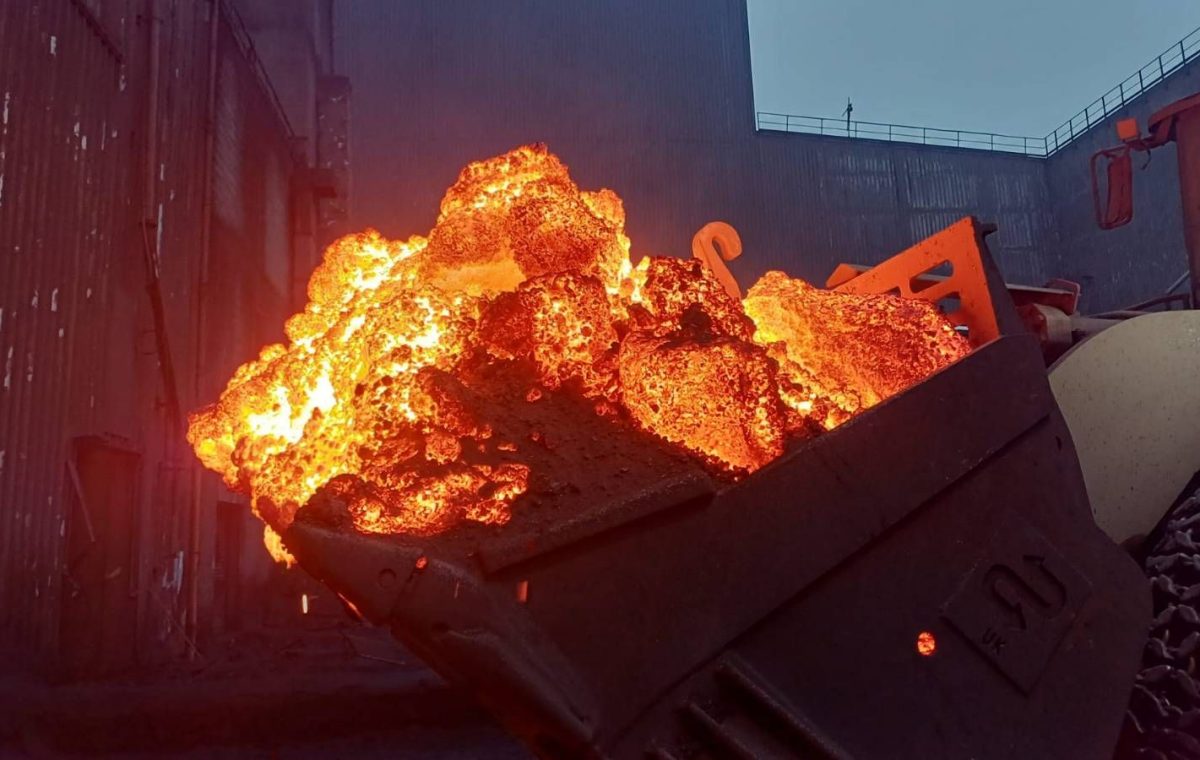
The investment brings one of the more unusual approaches to cement decarbonisation closer to commercial scale. Reclinker’s process recovers hardened cement paste from demolished concrete and feeds it into the electric arc furnaces used to recycle scrap steel. The material replaces some of the lime flux normally required in steelmaking and, exposed to the furnace’s high temperatures, is converted into a cementitious slag that can be cooled and ground for use in new cement.
The underlying technology emerged from research at the University of Cambridge and was described in a 2024 paper in Nature. The researchers found that recovered cement paste could be “reclinkered” inside an electric arc furnace and that the resulting material could meet specifications for Portland clinker. Because the used cement has already undergone the carbon-intensive decomposition of limestone during its first production cycle, recycling it avoids most of the process emissions associated with making fresh clinker.
That distinction matters in an industry where emissions cannot be eliminated simply by changing energy sources. Calcination, the chemical conversion of limestone into lime, produces carbon dioxide independently of the fuel used to heat the kiln. The International Energy Agency estimates that such process emissions account for roughly two-thirds of emissions from cement production.
Reclinker says its current product can cut emissions by more than 50 per cent compared with conventional cement and reach cost parity, claims that have not yet been independently demonstrated at full commercial scale. The Cambridge research suggests the process could ultimately go considerably further if electric furnaces operate on low-carbon electricity.
The company has moved beyond laboratory testing. Multiple production runs at 7 Steel UK’s Cardiff works have made more than 1,000 tonnes of clinker, according to investor Zero Carbon Capital, and Reclinker has secured its first commercial sales through cement-blending partner Cemblend. The new capital is intended to turn those trials into continuous commercial operations. Welsh reporting has put the planned Cardiff capacity at as much as 120,000 tonnes annually.
“We are thrilled to have received backing from both our existing and incoming investors,” chief executive Bill Yost said. “This oversubscribed round sends a strong signal that UK investors are serious about decarbonisation.”
The commercial opportunity is sharpened by changes taking place in the steel industry itself. Cement producers have traditionally reduced the clinker content of their products by blending in ground granulated blast-furnace slag, a by-product of conventional ironmaking. As steelmakers replace blast furnaces with lower-carbon production routes, supplies of that material are expected to fall. The IEA has identified declining blast-furnace slag availability as a consequence of the steel industry’s technological transition, while recent European research forecasts a steep reduction in supplies through the 2030s and 2040s.
Reclinker’s proposition effectively turns that industrial shift into part of its supply chain: electric arc furnaces that replace older steelmaking capacity become production equipment for recycled clinker.
Demand is also receiving public-sector support. Innovate UK’s programme for next-generation low-carbon concrete is designed to accelerate commercial adoption, and its Advance Market Commitment brings prospective buyers into the development of markets for new materials. A related government competition launched this year is offering up to £11.5 million to companies developing concrete-decarbonisation technologies.
The next test is therefore less about whether cement can be produced in a steel furnace, which industrial trials have established, than whether Reclinker can manufacture it reliably and economically in sustained volumes. Cardiff will provide the first commercial answer before the company attempts to reproduce the model at electric arc furnace plants abroad.
Written by the newsroom, not a summariser. Free, and you can leave whenever.





0 comments
Anyone can read the thread · subscribers can post