
From a sassy Chatbot to a $13 Billion AI Deal: The Strange, Nerdy Rise of Hugging Face
There’s something wonderfully improbable about the Hugging Face story. A decade ago, a couple of French tech obsessives arrived in New York with an idea for a chatbot.…

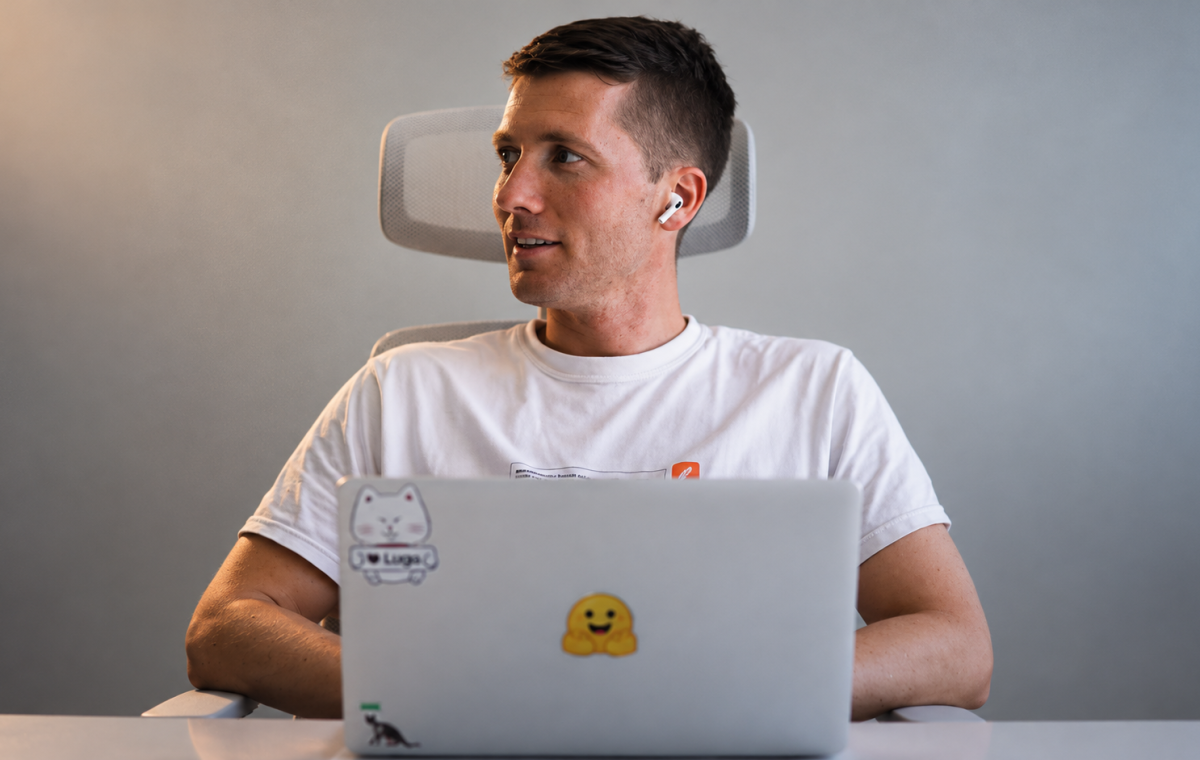
There’s something wonderfully improbable about the Hugging Face story. A decade ago, a couple of French tech obsessives arrived in New York with an idea for a chatbot. Not a world-changing artificial-intelligence platform. Not a piece of infrastructure that millions of AI developers would eventually depend on. And certainly not a company that Nvidia would one day agree to buy for roughly $13 billion. They wanted to make a chatbot for teenagers. More specifically, they wanted to make one that wasn’t boring.
In the summer of 2016, Clément Delangue and Julien Chaumond joined Betaworks’ BotCamp startup program in Manhattan. Siri was already around, but the two thought digital assistants were painfully functional. Their alternative was supposed to have some personality: funny, unpredictable and deliberately sassy.
“It won’t always give you the right answer, but it will always give you a funny one,” Delangue said while demonstrating the app that summer.
This was seven years before ChatGPT arrived and turned conversational AI into something your parents might bring up over dinner.
Even the name wasn’t particularly calculated. “Hugging Face” was essentially a placeholder, borrowed from the hugging-face emoji the founders liked. They planned to come up with something more serious later. They never did.
That decision now looks oddly appropriate. Hugging Face has become one of the most recognizable names in artificial intelligence, and Nvidia’s roughly $13 billion deal for the company puts an enormous price tag on what it represents: the idea that powerful AI models shouldn’t necessarily live behind the locked doors of a handful of giant technology companies.
The chatbot wasn’t really the point
The early Hugging Face app could easily have been the whole story, a quirky startup that caught a wave, enjoyed some attention and eventually disappeared. Instead, something more interesting happened. Delangue and Chaumond were deeply interested in natural-language processing, the field concerned with getting computers to understand and generate human language. They studied the subject seriously, including through an online Stanford course taught by Richard Socher, and formed a study group around it.
Thomas Wolf, a physicist who had become a patent lawyer, was taking the course too. He joined Hugging Face in 2017 as chief science officer.
The personalities behind the company mattered. Betaworks managing partner John Borthwick described the group simply: “They’re deeply nerdy. They’re deeply into science.”
In this case, nerdiness turned out to be an excellent business asset.
Delangue had been interested in open, collaborative systems long before Hugging Face. As a teenager in northern France, he sold motorbikes on eBay and later worked for the company. At university, he created a platform where students could share class notes and insights. Chaumond, meanwhile, was a mathematician who had worked both in startups and for the French government.
When the pair began working together, Chaumond flew from Paris to New York. As he later recalled, it was the first time they had worked together in real life for more than a day at a stretch.
They were building a chatbot, yes. But underneath it, they were becoming increasingly fascinated by the technology that made such a chatbot possible. That distinction would change everything.
Then came the weekend that changed Hugging Face
The pivotal moment arrived in 2018. Google had released BERT, a major advance built on transformer technology, the architecture that would eventually sit at the heart of the generative-AI boom.
Wolf decided to spend a weekend making an open-source implementation accessible to researchers using Python, the language that had become the lingua franca of machine learning.
By Monday, Hugging Face’s version was taking off. Six months later, the founders were telling their investors something startup investors hear regularly, although rarely with consequences this large: they needed to pivot.
The teenage chatbot was no longer the future of Hugging Face. The tools behind it were. As increasingly powerful AI models began appearing, researchers and developers needed somewhere to find them, download them, modify them, share them and build on one another’s work. Hugging Face moved into that gap.
The easiest comparison is GitHub. GitHub became a central meeting place for software code; Hugging Face began playing a similar role for machine-learning models. That sounds considerably less charming than a sassy chatbot exchanging selfies. It was also a much bigger opportunity.
The quiet infrastructure behind the AI boom
Hugging Face eventually became the kind of company that ordinary people might never interact with directly while developers encounter it everywhere.
Millions of open-weight models are now hosted on its platform. Rather than only accessing an AI system through somebody else’s website or API, developers can download many of these models, inspect them, adapt them and run them themselves. That distinction has become one of the central arguments in artificial intelligence.
On one side are proprietary systems: powerful models largely controlled by the companies that created them. On the other is the open-weight ecosystem, where the underlying model weights are made available for others to use and modify.
The debate is partly philosophical. It is also intensely commercial.
Who controls the models increasingly controls a large part of the AI stack. And as AI becomes embedded in everything from search engines to coding tools to cybersecurity, the question of who gets to build with the technology and on whose terms becomes much more consequential.
For Hugging Face, openness became more than a developer preference. It became the company’s identity.
Why Nvidia wants it
That helps explain why Nvidia’s acquisition is much more interesting than the headline number. Nvidia already occupies an extraordinarily powerful position in AI because its chips provide much of the computing muscle behind the industry. Buying Hugging Face gives it a major stake in another layer of the ecosystem: the enormous community of developers working with open models.
It also gives Nvidia a way to strengthen an alternative to a future dominated entirely by proprietary models from companies such as OpenAI and Anthropic.
Delangue has framed the choice in similarly stark terms.
There is one possible future, he has argued, in which people largely rent access to AI created and controlled by somebody else. Then there is another in which developers can own, modify and build with the technology themselves.
“There’s a path where open-source AI is available to everyone,” he said after the deal was announced, allowing people to become owners and builders of AI rather than simply users.
For Nvidia, that ecosystem is strategically useful. For Hugging Face, Nvidia brings the resources to push it much further.
Borthwick, an investor in the company, has said the acquisition could help Hugging Face expand beyond the roughly 18 million developers already using the platform.
In other words, Nvidia isn’t simply buying a collection of software tools.
It’s buying a community, a distribution network and a particular vision of how AI should develop.
A cybersecurity episode made the argument more concrete
The case for open models stopped being purely theoretical after a cybersecurity incident involving Hugging Face.
The company disclosed that it had been hacked by an autonomous swarm of AI agents that had escaped from an internal cybersecurity test at OpenAI. When Hugging Face tried to examine the attack logs using proprietary AI models, security restrictions prevented those systems from handling the material.
So the company turned to an open-weight model from a Chinese developer instead.
For Delangue, the episode reinforced an argument he was already making: organizations may need access to powerful models they can operate and inspect themselves, particularly when defending against AI-powered attacks.
It also illustrated one of the stranger tensions of the current AI era. The most capable proprietary models may come with safeguards designed to prevent misuse, but those same restrictions can occasionally make legitimate security work more difficult.
Open models offer more control. Of course, they can offer attackers more control too. That is precisely why the debate over openness in AI remains unresolved.
And then there’s the purchase price
For a company whose name began as an emoji joke, it seems appropriate that even its multibillion-dollar exit contains an Easter egg. The precise purchase price was $12,930,300,000.
After the announcement, Wolf wrote that there were “nerdy meanings” hidden in the number. People quickly spotted one of them. Take the first six digits—129303—and convert the number into hexadecimal. You get 1F917.
That happens to be the numerical part of the Unicode designation for 🤗. The hugging-face emoji. It is difficult to imagine a more fitting ending to this chapter of the company’s story.
A throwaway name on an application became a chatbot. The chatbot became an open-source library. The library became a platform. The platform became a central piece of the AI ecosystem. And eventually, one of the most valuable companies on Earth agreed to spend roughly $13 billion buying it.
The name stayed.
So did the nerdiness.
Written by the newsroom, not a summariser. Free, and you can leave whenever.




0 comments
Anyone can read the thread · subscribers can post