
TikTok’s U.S. deal reveals a third way and Britain may be best equipped to try It
ByteDance has reached an agreement with a consortium of non-Chinese investors to establish a new American entity for TikTok, concluding a protracted legal and political struggle that threatened…

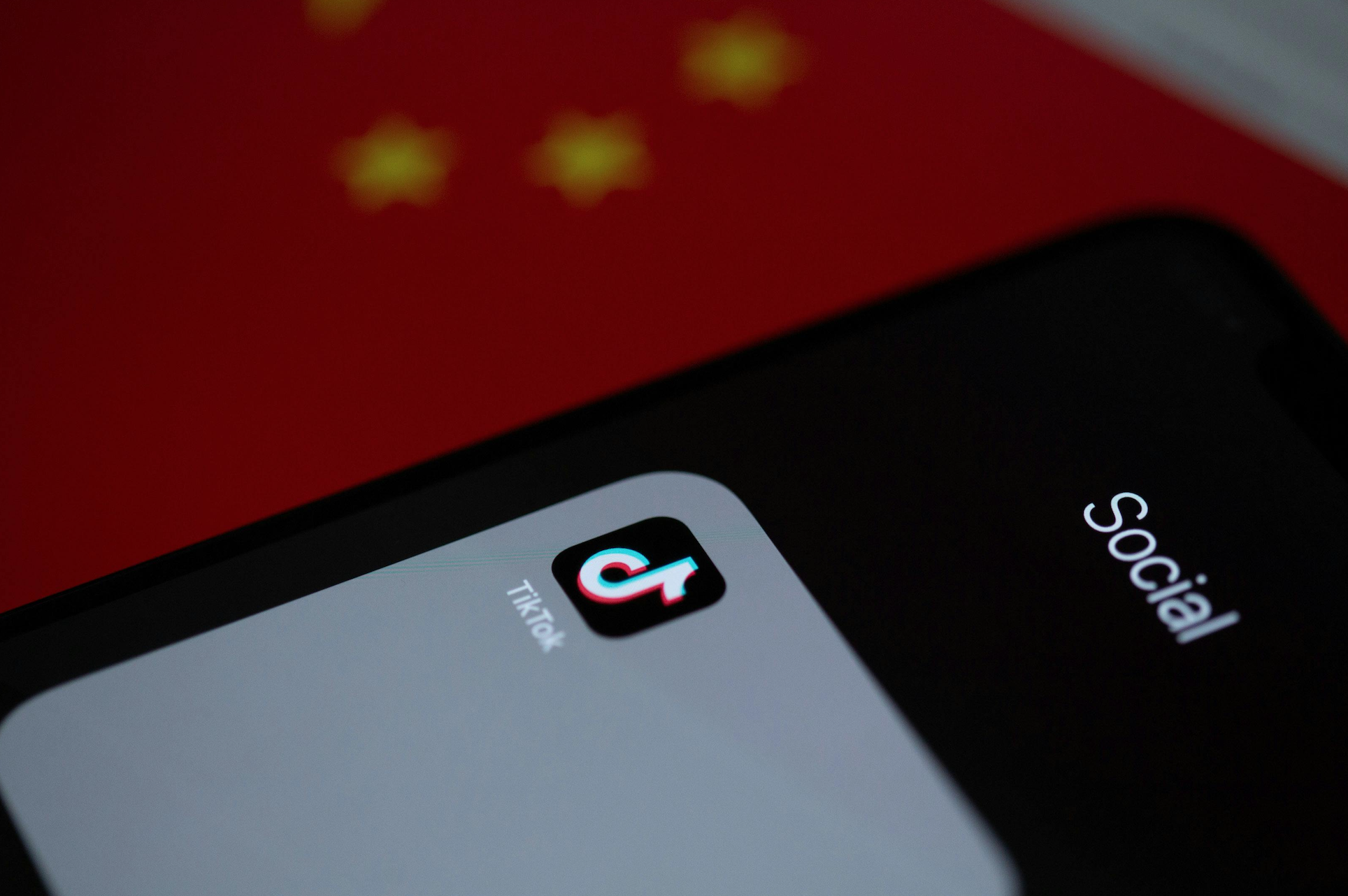
ByteDance has reached an agreement with a consortium of non-Chinese investors to establish a new American entity for TikTok, concluding a protracted legal and political struggle that threatened the app’s existence in the world’s most lucrative market.
For Britain, watching from the sidelines, the settlement offers more than a postscript to an American culture war. It exposes the contours of a “third way” between prohibition and permissiveness, one that relies on regulatory leverage, transparency, and institutional oversight rather than forced divestment.
Let us unpack all this
The arrangement, formalized on January 23rd, 2026, transfers majority ownership and operational control to U.S.-aligned investors while permitting ByteDance to retain a minority stake and license its core algorithm, addressing congressional demands for separation while stopping short of a full divestiture that Beijing had long resisted.
Under the terms disclosed Thursday, Oracle, the Emirati investment firm MGX, and private equity group Silver Lake will each hold 15 percent stakes in the newly formed U.S. TikTok entity, collectively controlling 45 percent of voting shares.
Additional investors, including affiliates of General Atlantic and Susquehanna, both previous ByteDance backers, plus the personal investment vehicle of Dell Technologies founder Michael Dell, bring non-Chinese ownership above 80 percent.
ByteDance will retain just under 20 percent ownership while maintaining proprietary rights to TikTok’s recommendation algorithm, which it will license to the American venture under terms not publicly disclosed. Adam Presser, TikTok’s former head of operations, will serve as chief executive of the U.S. entity, which will operate from existing offices in Culver City, California, with content moderation decisions made domestically by an American-majority board of seven directors. Shou Chew, TikTok’s global CEO, will hold one seat on this board.
The deal resolves a crisis precipitated by the Protecting Americans from Foreign Adversary Controlled Applications Act, passed by Congress in 2024 and upheld unanimously by the U.S. Supreme Court in January 2025. That legislation mandated ByteDance sever operational ties with its American subsidiary by January 2025 or face a nationwide ban.
TikTok briefly went offline for 14 hours as the initial deadline approached before President Donald Trump, having returned to office that month, issued a series of executive orders delaying enforcement to permit negotiations. His final approval in September 2025 was required under the statute’s provisions.
The arrangement bears resemblance to “Project Texas,” TikTok’s earlier proposal to isolate U.S. user data within Oracle’s American cloud infrastructure, a framework previously rejected by lawmakers as insufficient to address national security concerns regarding potential Chinese government access to American user data or influence over content distribution.
Critics contend the current structure may not satisfy the law’s requirement to end all “operational relationships” between ByteDance and U.S. TikTok, given the parent company’s retention of algorithmic control and minority ownership. These concerns intersect with geopolitical sensitivities: China amended its export control regulations in 2020 to cover algorithms and source code, effectively granting Beijing veto power over any transaction involving TikTok’s core technology.
While Trump administration officials claimed last year to have secured tacit Chinese approval for the framework, Beijing has issued no formal public statement on the finalized deal.
The ownership configuration has also drawn scrutiny for investor ties to the Trump administration. Oracle co-founder Larry Ellison, a close associate of the president, has lobbied the White House on matters including his son’s bid to acquire Warner Bros.
Discovery. MGX has conducted business with World Liberty Financial, a cryptocurrency venture linked to the Trump family. Such connections have prompted concerns among some users that content moderation could increasingly reflect pro-administration viewpoints, though the American-majority board structure is designed to insulate operational decisions from foreign influence.
TikTok’s American journey has been marked by escalating restrictions since 2019, when initial security reviews expanded into bans across military devices, federal agencies, and numerous state governments. Both the Trump and Biden administrations pursued divestiture, with Trump’s 2020 attempt to force a sale to Oracle and Walmart collapsing amid Chinese regulatory resistance and legal challenges.
The platform’s user base nonetheless grew substantially during the pandemic, reaching over 170 million Americans by 2024, making its potential removal a significant cultural and economic disruption.
The resolution carries implications beyond TikTok itself.
It establishes a precedent for how the United States might address data security concerns involving foreign-owned digital platforms without resorting to outright bans, a middle path that preserves market access while attempting to mitigate national security risks.
Yet fundamental questions endure: whether algorithmic licensing arrangements can truly insulate American users from foreign influence, and whether similar frameworks might apply to other Chinese technology firms operating in sensitive sectors.. As global technology decoupling accelerates, the TikTok settlement may prove less an endpoint than a template for future confrontations over data sovereignty in an increasingly fragmented digital order.
Britain’s digital dilemma: How to shield citizens without surrendering the open internet
The hypothetical resolution of America’s TikTok standoff, however distant from current reality, offers London a moment of clarity. While Washington grapples with binary choices between national security and digital freedom, analysts note that Britain possesses tools to navigate this terrain with greater nuance. The United Kingdom need not choose between banning a platform used by 25 million citizens or surrendering to opaque data practices.
Instead, it can leverage its regulatory architecture to establish a third way: demanding transparency and accountability from foreign-controlled platforms without resorting to prohibition.
Since March 2023, TikTok has been barred from government devices following security assessments by the National Cyber Security Centre. Yet ministers have explicitly stated there are “no plans” for a nationwide ban
Blanket bans risk driving activity underground while sacrificing legitimate economic and cultural benefits, TikTok supports an estimated £1.3 billion in UK advertising revenue annually and provides livelihoods for thousands of creators.
The more promising path, as experts point out, lies in strengthening three existing pillars of British digital governance. First, the Online Safety Act already empowers Ofcom to demand granular information about content moderation systems, algorithmic amplification, and data handling practices.
Regulators should exercise these powers more assertively not merely to fine platforms for inaccurate reporting, as occurred with TikTok’s £1.875 million penalty in 2024, but to mandate real-time transparency dashboards showing how content reaches British users and where their data flows.
Such requirements would apply equally to all foreign platforms, avoiding the appearance of singling out Chinese firms while addressing legitimate concerns that staff in China retain access to UK user data.
Second, Britain should accelerate work on data localisation frameworks that stop short of full sovereignty demands. The UK GDPR already restricts transfers of personal data to jurisdictions lacking “adequacy” status, a designation China does not hold. Rather than attempting technically dubious mandates for complete data isolation, regulators could require that core processing of British users’ data occur within UK or EU jurisdictions, with strict auditing of any cross-border access.
This approach mirrors elements of TikTok’s failed “Project Texas” proposal in the United States but with stronger enforcement teeth through Ofcom’s statutory powers.
Third, Britain must address the algorithmic black box. The concern is not merely that ByteDance might share data with Chinese authorities under that country’s 2017 National Intelligence Law, but that recommendation systems could subtly shape discourse without democratic accountability.
The UK could pioneer requirements for independent algorithmic audits, conducted by accredited third parties with security clearances, examining whether amplification patterns disproportionately promote content aligned with any foreign government’s interests.
Such audits would apply platform-agnostically, covering Meta and Google alongside TikTok, thereby avoiding protectionism while establishing norms for democratic oversight of attention economies.
Critics will rightly note trade-offs.
Excessive transparency requirements could chill innovation; stringent data rules might fragment the global internet; algorithmic audits risk government overreach into editorial judgment. These concerns merit serious consideration. But Britain’s tradition of proportionate regulation, evident in its balanced approach to online harms, suggests it can navigate these tensions better than nations resorting to blunt instruments.
The ultimate test lies not in banning apps but in building resilience. Digital literacy programmes must equip citizens to recognise manipulative content regardless of its origin. Competition policy should foster alternatives to dominant platforms, reducing dependency on any single foreign-controlled service. And Britain should lead international coalitions, through the OECD, G7, and Five Eyes, to establish baseline standards for cross-border data flows that protect citizens without enabling techno-nationalist fragmentation.
America’s hypothetical TikTok settlement, with its complex ownership structures and retained algorithmic control, points to a deeper truth: in an interconnected world, clean breaks are illusory.
Britain’s opportunity is to demonstrate that democratic societies can protect their citizens not through walls, but through windows, demanding visibility into how foreign platforms operate while preserving the open internet that fuels innovation and expression.
Written by the newsroom, not a summariser. Free, and you can leave whenever.





0 comments
Anyone can read the thread · subscribers can post