
ScrubMarine: How this small UK startup plans to clean ship hulls and save billions?
A British maritime-robotics startup, ScrubMarine, has raised $1m (€849,000) in pre-seed funding to develop autonomous systems for underwater inspection and hull maintenance, as shipping companies search for ways…

A British maritime-robotics startup, ScrubMarine, has raised $1m (€849,000) in pre-seed funding to develop autonomous systems for underwater inspection and hull maintenance, as shipping companies search for ways to cut fuel bills and meet tightening environmental rules.
The round, announced in December, was led by PXN Ventures through the Northern Powerhouse Investment Fund II and by SFC Capital, with backing from strategic angel investors including Colin Greene, a former regional chief executive at Apple, and Graham Westgarth, formerly president of the UK Chamber of Shipping.
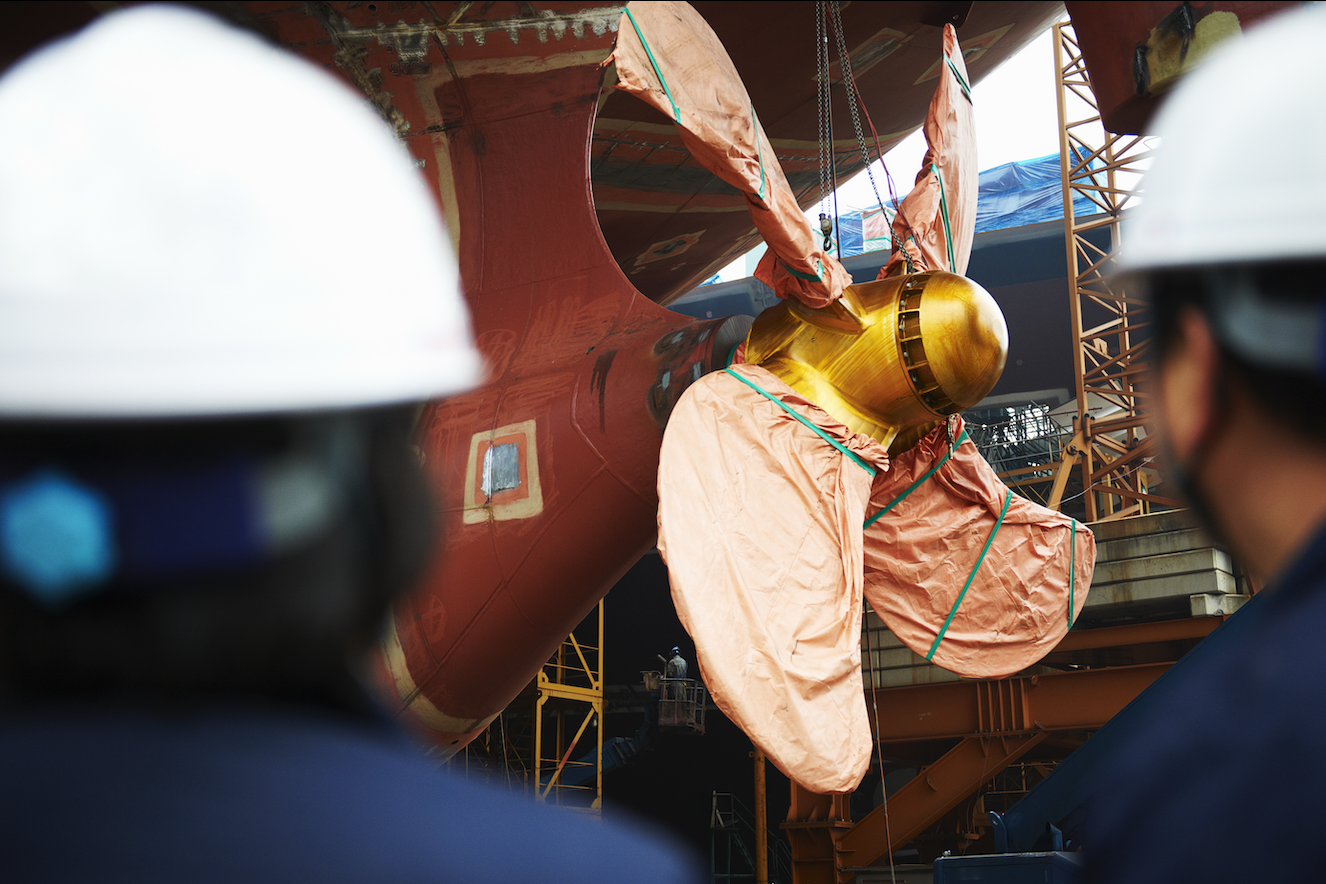
ScrubMarine is tackling one of the industry’s most persistent inefficiencies: biofouling, the build-up of algae, barnacles and other organisms on ship hulls. The problem increases hydrodynamic drag, slows vessels and can raise fuel consumption by as much as 40%.
With marine fuel accounting for close to half of a vessel’s operating costs, the cumulative impact is large. Industry estimates put the annual cost of biofouling to global shipping at more than $100bn, alongside higher greenhouse-gas emissions and greater wear on hulls and propulsion systems.
Traditional hull cleaning relies heavily on human divers or periodic dry-docking. Both are expensive and risky, and they offer only intermittent insight into a vessel’s condition. ScrubMarine’s approach is more about automating maritime maintenance.
The company is developing a platform that combines modular subsea robots with cloud-based analytics to provide continuous data on hull condition. Its compact cleaning robot, dubbed the “Turtle”, removes fouling while simultaneously collecting inspection data. Deployment and recovery are handled by an autonomous surface vessel, the “Whale”, removing the need for divers or specialised port infrastructure.
The idea that robots can deliver cleaner hulls more frequently, and with better data, has gained traction as environmental regulation tightens. The International Maritime Organisation’s carbon-intensity rules are forcing operators to squeeze emissions out of existing fleets, not just new ships.
Even marginal improvements in fuel efficiency can make the difference between compliance and penalty. Robotic hull cleaning also appeals to ports keen to reduce the risks of in-water maintenance and the spread of invasive species.
Large-capacity cleaning robots can cost $80,000–150,000, and the total upfront investment, including training and software, can exceed $200,000. Many ports and smaller operators still balk at the expense.
Technical challenges also persist: strong currents, rough seas and complex hull designs can limit effectiveness, and regulatory rules on in-water cleaning vary widely between jurisdictions.
Investors backing ScrubMarine argue that its integrated, data-driven model could help overcome some of these hurdles, particularly if offered as a service rather than a capital purchase.
PXN Ventures has described the company as an example of globally scalable industrial technology emerging from northern England, while SFC Capital has highlighted the team’s mix of engineering capability and shipping-industry knowledge.
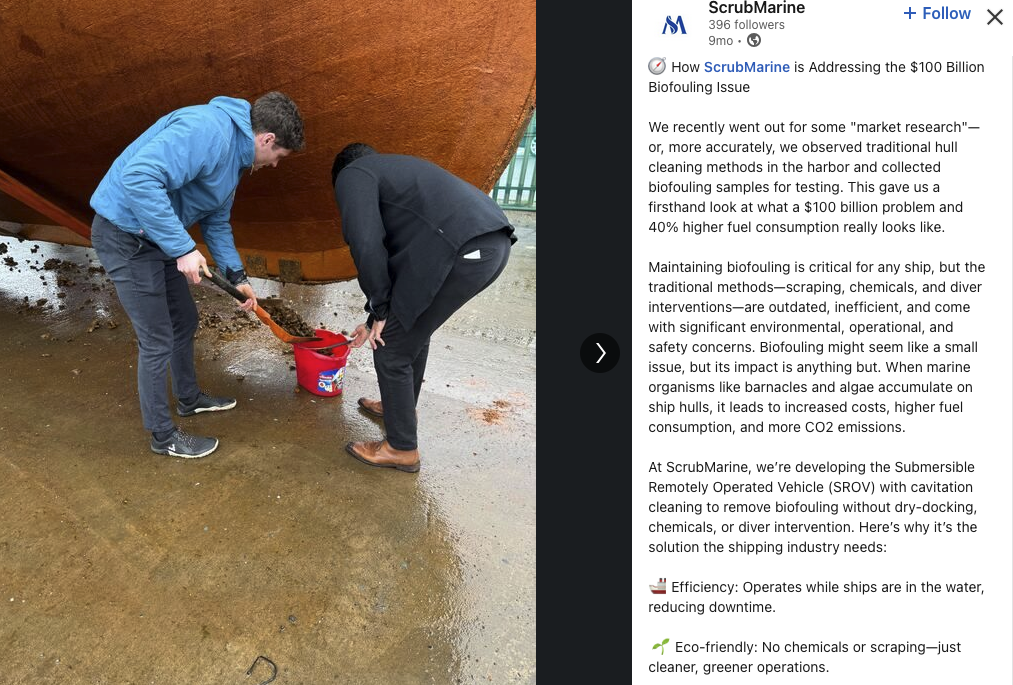
Founded by robotics engineers Rohith Devanathan and Clyne Albertelli, ScrubMarine has roots in academic research and was an early participant in Heriot-Watt University’s DeepTech LaunchPad.
According to Industry reports, the market for autonomous hull-cleaning robots was valued at about $81 billion in 2024 and is expected to grow to roughly $130 billion by 2032, expanding at an average annual rate of just over 7%. The growth depicts a shipping industry under pressure to cut fuel costs, lower emissions, and modernise maintenance practices.
Demand is being driven by tighter environmental rules, including the International Maritime Organization’s carbon intensity requirements, as well as growing concern about invasive species spreading through hull fouling.
While the high cost of advanced robotic systems remains a barrier for some operators, the combination of fuel savings, reduced downtime, and regulatory compliance is making autonomous hull cleaning an increasingly standard part of modern maritime operations.
As of 2024, over 1,200 operational hull cleaning robots were in service globally, servicing both commercial and defense sectors. These robots contribute to a 15%–25% increase in fuel efficiency by removing marine biofouling from vessel hulls, which can otherwise cause drag and increase fuel consumption by up to 40%.
Ports in Asia-Pacific have recorded over 200 active deployments in 2023, highlighting their growing reliance on robotic solutions for vessel maintenance. More than 75% of robotic hull cleaning units now incorporate AI-powered navigation and surface recognition systems to optimize cleaning precision and reduce labor.
Increased adoption is evident in key maritime hubs such as Singapore, Rotterdam, and Dubai, which together accounted for nearly 400 robotic cleaning operations per month in late 2023. The proliferation of unmanned marine systems continues to reshape maritime operations, with hull cleaning robots leading innovation in submerged maintenance.
Written by the newsroom, not a summariser. Free, and you can leave whenever.







0 comments
Anyone can read the thread · subscribers can post