
Anthropic files for Nasdaq listing, disclosing $16.3bn in half-year revenue and an $80.7bn loss
The Claude developer’s prospectus reveals its first quarterly operating profit, a share structure that keeps control with its founders and a trust, and compute commitments worth hundreds of…

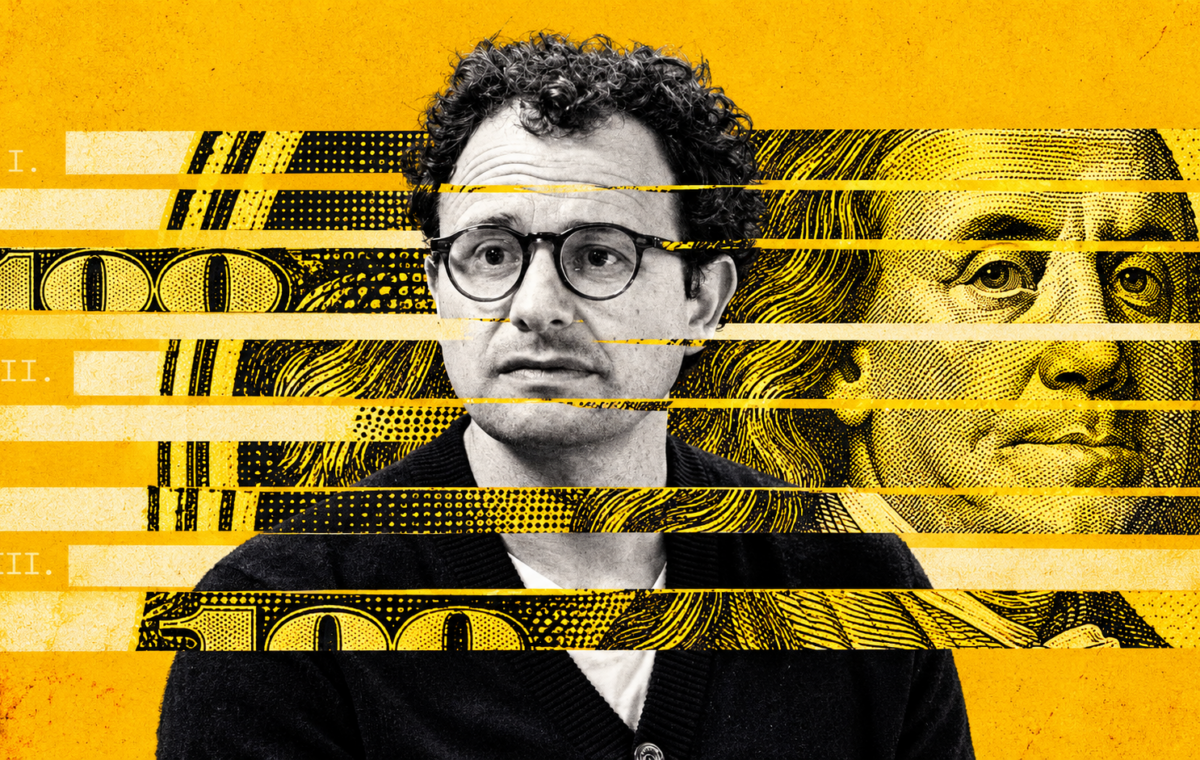
The Claude developer’s prospectus reveals its first quarterly operating profit, a share structure that keeps control with its founders and a trust, and compute commitments worth hundreds of billions of dollars.
Anthropic, the San Francisco company behind the Claude AI models, has made its stock market prospectus public, opening its accounts to outside scrutiny for the first time. The company filed a registration statement on Form S-1 with the U.S. Securities and Exchange Commission on Monday and intends to list its Class A common stock on the Nasdaq Global Select Market under the symbol “ANT”; the number of shares and the price range have not yet been determined.
The offering is being watched as a gauge of demand for the artificial intelligence boom. It is expected to surpass SpaceX’s June IPO and is widely viewed as a test of investor appetite at a time when investors have grown more concerned about the industry’s spending.
The figures show a business growing at a pace rarely seen at this scale. Revenue rose 1,304% to $16.29bn in the six months to June 30, up from $1.16bn a year earlier, and revenue for all of 2025 was $4.59bn. Most of the half-year total came in the second quarter, when revenue reached $11.6bn and Anthropic posted its first operating profit, of $974m.
The headline loss is far larger, though mostly on paper. The company reported a net loss of $80.7bn through June, the vast majority of it the result of accounting charges. The filing books $72.4bn for the rising value of its convertible notes, which increased because Anthropic’s own valuation rose, and a further $8.8bn from note purchase agreements with Google and Amazon. Anthropic lost $42bn in 2025. It has raised $141.1bn in total and held $112.4bn in cash and $19.3bn in short-term investments at the end of June.
Customer data points to heavy spending by large buyers. More than 11,900 customers pay $100,000 or more a year, up from about 950 a year earlier, and net revenue retention was about 900%. Five clients accounted for about 25% of revenue in the first nine months of 2026, while purchases through cloud marketplaces made up 48% of sales. In an unusual disclosure, Anthropic estimates that 5% to 7% of revenue in that period came from customers who broke its usage policy or terms.
Public investors will have little say over the company. A company owned by the seven co-founders will hold a single Class F share carrying 50.1% of the votes on ordinary shareholder matters, a figure new share issues cannot dilute. Separately, the Long-Term Benefit Trust elects the majority of the board through a Class T share. Because the trust can elect a board majority, Anthropic qualifies as a controlled company under Nasdaq governance rules. The founders, in a letter signed by all seven, describe AI as “one of the most consequential technologies in human history.”
The cost of staying at the frontier is set out in the compute section. The filing lists long-term compute agreements with Google worth at least $114.5bn, Amazon at least $110bn and Microsoft at least $44.9bn, plus equipment leases with Broadcom of about $161.2bn. Google’s position may grow: in March, Anthropic gave it an option to buy up to $10bn of Class N common stock in a private placement alongside the offering, at the IPO price.
The risk factors are extensive. They run from page 26 to page 119 and include a warning that a disaster caused by AI could be too large for any single insurer, or even the industry as a whole, to cover. Anthropic also discloses that its models have shown behaviour such as resisting shutdown or acting in ways that resemble blackmail.
The filing also details the company’s dispute with the Trump administration. The Department of War designated Anthropic a supply-chain risk after the company refused to remove contractual prohibitions on using its Claude models for lethal autonomous warfare. On September 25 an appeals court ruled 2-1 against Anthropic, and the company petitioned on October 13 for a rehearing. The prospectus additionally lists a civil investigative demand from the Federal Trade Commission in October and the $1.5bn Bartz copyright settlement.
Monday’s filing had been expected. Anthropic confidentially filed a draft registration statement in June, following a $65bn funding round that valued it at $965bn. SEC rules require companies using the confidential route to publish their registration materials 15 calendar days before the start of a formal investor roadshow.
Timing and valuation remain unconfirmed by the company. People familiar with the matter told The Wall Street Journal that Anthropic aims to go public in the week of 16 November and could raise $100bn or more at a valuation of $1.5tn to $2tn; the filing gives no target valuation. Goldman Sachs and Morgan Stanley lead a group of 22 banks.
The prospectus leaves third-quarter revenue blank. The Financial Times reported earlier this month that Anthropic had told investors it reached $16.8bn in that quarter, which would exceed its revenue for the entire first half.
Written by the newsroom, not a summariser. Free, and you can leave whenever.





0 comments
Anyone can read the thread · subscribers can post